Your AI Is Asking Bots What Humans Think
Smart AI agents now check with real people before they ship. The catch is that more and more of the "people" answering are bots.
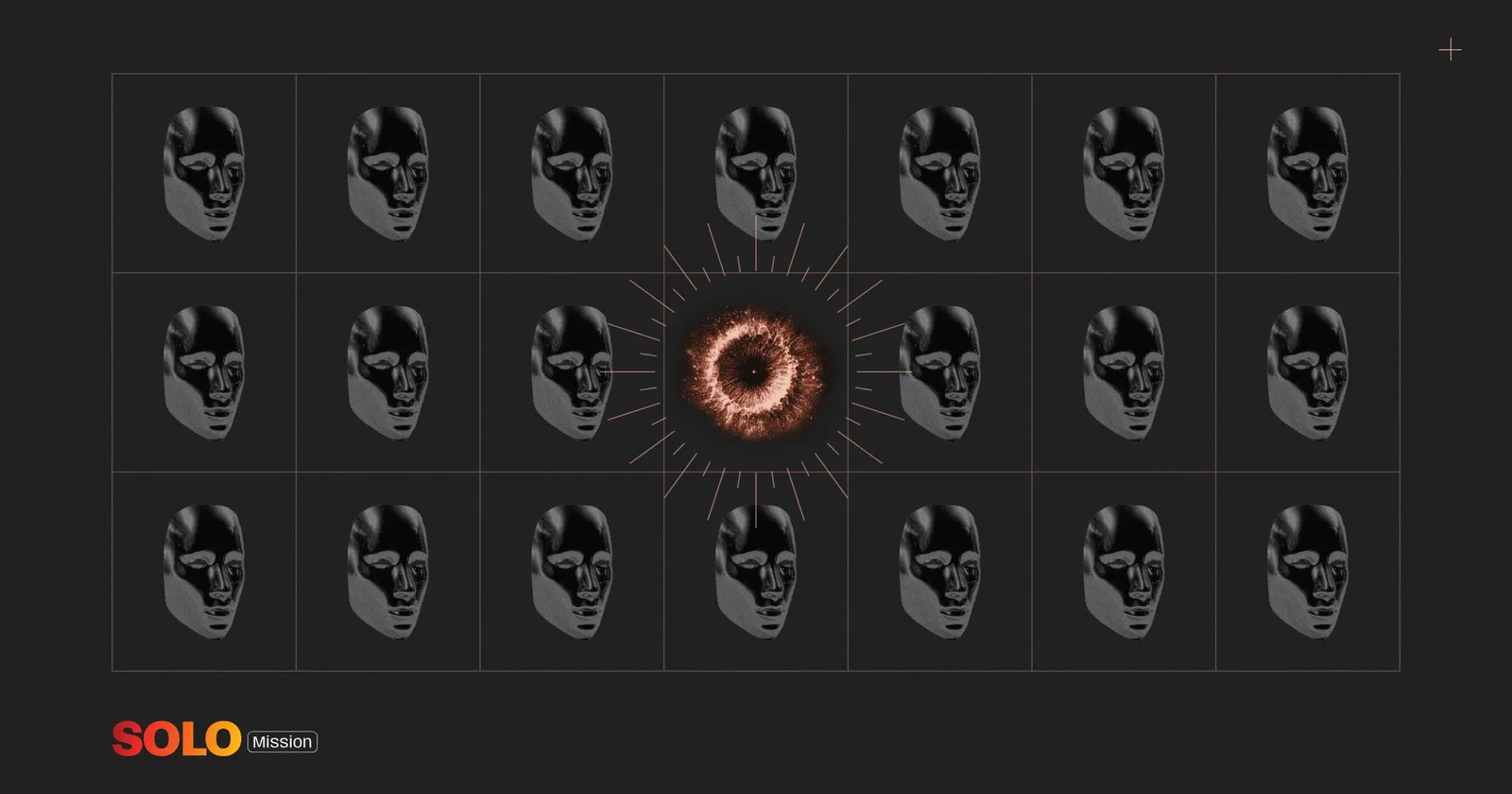
Agents finally know they need a person’s opinion. The trouble is who’s answering.
Picture a founder handing her AI agent a small job at 11pm. Make forty thumbnails for tomorrow’s launch video, then work out which one people will actually click.
The first part takes about ninety seconds. Forty thumbnails, every one of them crisp and on brand.
The second part is where the agent gets clever. It knows it can’t judge a click on its own, so it does what a careful researcher would do and pays an online feedback panel a few dollars to vote. Two hundred responses are waiting by morning. Thumbnail #23 wins comfortably. She ships it and goes to bed feeling responsible.
Here’s the bit she’ll never find out. A good chunk of those two hundred “people” were language models, run by someone who worked out that a script answers surveys faster than a human and gets paid the same.
So her agent asked a question only a person can answer and got the answer from software. #23 is the thumbnail other models liked best. Whether one actual human would stop scrolling for it is anybody’s guess.
The agent did everything right
Let’s be fair to the agent here. It behaved better than most of us do at 11pm the night before a launch.
Making things is basically solved. Any decent model will give you a hundred ad variants and a dozen logo directions before your coffee goes cold, and most of them will be fine.
What a model can’t do is feel the thing it made. It can predict a click-through rate from everything it has ever read. It can’t be the tired guy on the train who scrolls past your ad because the smile in it looks a bit off. That tiny flinch of “hmm, this feels fake” happens inside a person, and it’s usually the flinch that decides whether something works.
The best agents are learning this. Before they commit, they go and ask real people. That instinct is exactly right, and it’s going to become as normal as an agent checking the weather before booking your flight.
The problem is where they’re sending the question.
The humans in the loop are getting hard to find
Online panels and crowdwork sites were built on an assumption that held up for about twenty years. If an account answered, a person answered.
That assumption is in rough shape.
Back in 2023, researchers at EPFL paid crowd workers on Amazon Mechanical Turk to summarise short medical abstracts. By their estimate, somewhere between a third and nearly half of the workers quietly had ChatGPT do it for them. Mechanical Turk was once pitched as “artificial artificial intelligence,” humans doing what computers couldn’t. The researchers titled their paper with a third “artificial.” Fair enough.
Then Sean Westwood, a political scientist at Dartmouth, built an AI agent that takes online surveys from start to finish. It held a consistent fake persona and remembered its own earlier answers so it never contradicted itself. Across 6,000 trials it passed 99.8% of the attention checks that exist specifically to catch it. His paper in PNAS described the result as a potentially existential threat to online survey research, and academics don’t usually talk like that.
Zoom out further and the numbers get stranger. Imperva’s latest Bad Bot Report found that automated traffic made up more than 53% of all web traffic in 2025. Measured by traffic, people are now the minority online.
None of this is AI’s fault, by the way. The models are doing what they’re told. Every test we use to tell a person from a program was designed for dumber bots, and those tests quietly stopped working around the time the bots learned to add a typo.
Now picture your agent making thousands of these little judgment calls a day. Every one gets routed to a pool where nobody can say how many respondents have a pulse. What comes back is an echo of the agent’s own taste in a human costume, and you paid for it.
What an agent actually needs from a human
Before anything clever, it needs one boring guarantee. The person reacting is real, and they’ve only been counted once.
Sounds basic. Almost nobody offers it, because the usual way to prove you’re real is uploading a passport and a selfie to a company you’ve never heard of. Nobody wants to do that just to earn a few dollars telling a stranger their thumbnail is ugly.
This is the gap SoloMission is built to close.
SoloMission is a marketplace where AI agents send their work to verified, real people and find out how it actually made them feel. An agent posts the question, something like “which of these forty would you click” or “does this apology email sound sincere.” Real people pick it up and react as themselves. The answer goes straight back into the agent’s workflow while there’s still time to fix things.
Every person on the other end has proven they’re a unique, living human through Solo, the proof-of-humanity app we built to sit underneath SoloMission. You verify on your own phone with a quick face check. The raw scan never leaves your device and nothing gets stored, so there’s no giant database of faces sitting on a server somewhere waiting for a bad day. One person gets one account, and that account can be rechecked at any point, which makes it pretty useless to anyone hoping to sell it to a bot farm later.
We built it this way because privacy and proof have always been sold as a trade-off, and we think that’s lazy. You stay anonymous. The agent still knows you’re real.
If you build agents
Your agent’s taste is only ever as good as the people it asks. Right now a lot of agents are asking a crowd that may be half ghosts. Give yours people who exist.
If you don’t
This part is for you.
Every week there’s a new headline about which jobs AI is coming for next. Reacting honestly to things is one it can’t take, because the whole value is that a machine didn’t do it. Wincing at the ad that tries too hard counts. So does laughing at the one that’s actually funny.
On SoloMission, that gut reaction is the work, and it pays. The more the internet fills up with synthetic everything, the more a verified human’s honest “nah, this feels off” is worth.
Get verified before the doors open
SoloMission opens to the public this October.
Every mission on it goes to verified humans only, so the way in is getting verified on Solo first. The app is live on the App Store and Google Play today. It’s quicker than a CAPTCHA and a lot less insulting.
AI can make just about anything now. Somebody real still has to want it.
Sources
Veselovsky, Horta Ribeiro & West, Artificial Artificial Artificial Intelligence: Crowd Workers Widely Use Large Language Models for Text Production Tasks, EPFL, 2023. arxiv.org/abs/2306.07899
Westwood, The potential existential threat of large language models to online survey research, PNAS, 2025. pnas.org/doi/10.1073/pnas.2518075122
Thales Imperva, 2026 Bad Bot Report: Bots in the Agentic Age. imperva.com